Drive down Sanatorium Road or Hazelden Lane in Oakridge today and there's nothing to suggest either name means anything at all — just quiet, tree-lined streets in one of West London's most established neighbourhoods. But every one of those names is a leftover clue from a very different piece of land, decades before Oakridge existed. Here's the story underneath the suburb.
What Was Oakridge Before It Was a Neighbourhood?
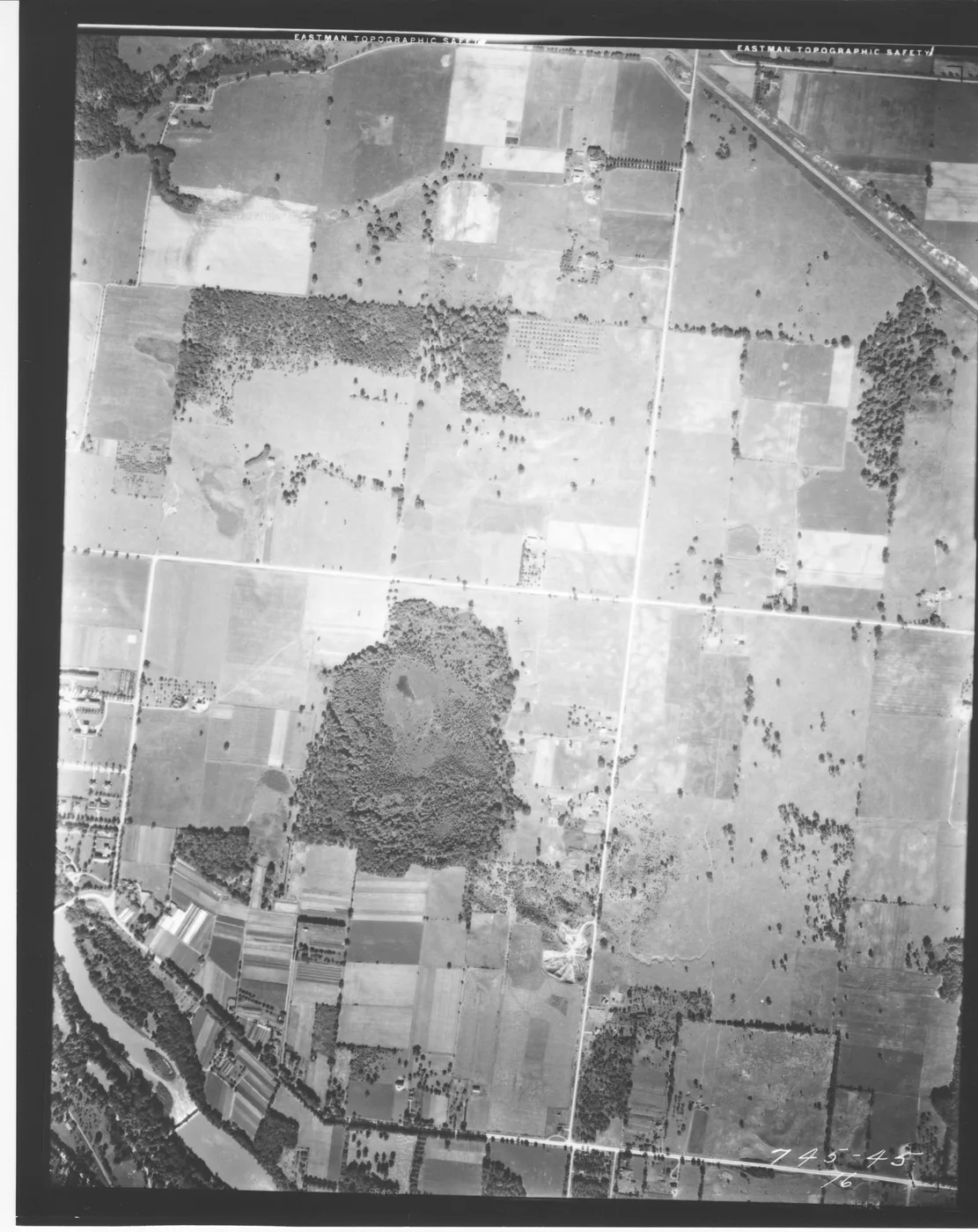
Open farmland — all of it. A 1942 aerial photograph of the area shows nothing but fields, with one exception: a dark, circular mass at the centre that would later become Sifton Bog. The entire footprint of modern Oakridge was still eight years away from its first house.
Why Is There a "Sanatorium Road" in Oakridge?
Because there really was a sanatorium here. Around 1900, tuberculosis was the leading cause of death in Ontario, and organizations across the province built sanatoria — facilities where patients recovered through fresh air, rest, and treatment, usually placed on the edge of a city where open countryside offered the conditions doctors prescribed. London's version stood roughly where Oakridge's western edge sits today. The building is long gone. The road that led to it kept the name.
Why Is There a "Hazelden Lane"?
Most London street names honour people. This one honours a house. "Hazelden" — now 1132 St. Anthony Road — was a gracious 1890s summer retreat built for the Little family, set among sweeping lawns and, as the name suggests, a stand of hazel trees. It was a landmark neighbours knew by name long before Oakridge's subdivisions existed, and when the street needed one, that's the name that stuck.
What's the Story Behind Thames Valley Golf Course?
Oakridge's golf course exists because of a trip to England. E.V. Buchanan, general manager of London's Public Utilities Commission, came home impressed by the public riverfront golf he'd seen abroad and realized the Commission's own 100 riverside acres — bought years earlier for the city's water supply wells, not recreation — could do double duty. No public money was ever spent building or running it. John Innes, a wounded WWI veteran and PGA of Canada professional with no prior course-design credit to his name, opened it as six holes on June 15, 1924.
By 1933, Innes had grown it into a full 6,110-yard championship 18-hole layout. Its grand opening on July 29, 1933 drew four of the biggest names in golf at the time — Sandy Somerville, the London-born U.S. Amateur champion, alongside Jack Nash, Joe Kirkwood, and Gene Sarazen — in front of one of the largest galleries the region had ever seen.
The course survived a battering after that. The Great Flood of 1937 sent the Thames over its banks, submerging the pump house and much of the fairways. Three years later, with Canada at war, the Department of National Defence took the grounds over as a training camp — by 1942, more than 5,000 soldiers trained there and golf became impossible. The course didn't reopen until 1946. Some of the camp's infrastructure never left: the water fountain beside the 5th tee on the Classic course still runs through pipes the army laid in 1940.
Why Was Sifton Bog Once Called "Byron Bog"?
Because it sat within the boundaries of the old Village of Byron before amalgamation absorbed it into London. It carried that name for decades until 1967, when Sifton Properties Limited — the same company building Oakridge at the time — donated the land to the city, and it was renamed in the company's honour. At its centre, Redmond's Pond was once a 23-hectare glacial lake that has spent roughly 10,000 years quietly filling with peat; today it's shrunk to just 0.2 hectares, sitting atop a peat layer measured at 18 metres deep.
When Did Oakridge Actually Get Built?
In phases, through the 1950s to the 1980s. A photograph from around 1961 shows Sifton's billboard for "The New Oakridge Park — Model Homes Entrance" standing alone in an open field, with nothing behind it but a barn and utility poles. By 1978, an aerial survey shows the transformation complete: curved residential streets fully built out, the bog still visible at the centre, the Thames River and Byron along the edge. Fifteen years turned farmland into the neighbourhood that exists today.
Every one of these photographs, along with the neighbourhood's full history section, lives on our Oakridge area page — this is the connected story behind them. Curious how the neighbourhood these events shaped looks today, on the ground? Reach out to Justin, who works this neighbourhood daily and can walk you through it in person.
Frequently Asked Questions
What was Oakridge before it was developed?
Open farmland. A 1942 aerial photograph shows the entire future footprint of Oakridge as fields, with only the future site of Sifton Bog visible as a distinct feature. Development didn't begin until the 1950s.
Why is there a Sanatorium Road in Oakridge, London Ontario?
Around 1900, tuberculosis was the leading cause of death in Ontario, and a sanatorium -- a facility where patients recovered through fresh air and rest -- was built on what is now Oakridge's western edge. The building is gone; the road that led to it kept the name.
Why was Sifton Bog originally called Byron Bog?
The wetland sat within the boundaries of the old Village of Byron before amalgamation into London, and carried that name for decades. It was renamed Sifton Bog in 1967 after Sifton Properties Limited -- the developer building Oakridge at the time -- donated the land to the city.
What is the history of Thames Valley Golf Course in Oakridge?
It opened as six holes in 1924 on Public Utilities Commission land originally acquired for the city's water supply, built without any public funds by John Innes, a WWI veteran with no prior course-design experience. It grew into a full 18-hole championship course by 1933, survived a major flood in 1937 and conversion into an army training camp during WWII, and reopened in 1946.

Justin Skrypnyk
Real Estate Broker | Sutton Group Chapman Realty Inc., Brokerage | Oakridge, London Ontario
Justin Skrypnyk is a Real Estate Broker serving Oakridge and West London. He writes regularly about the London Ontario market to help buyers and sellers make well-informed decisions.